Check out my pitch here!
Friday, September 27, 2019

Friday, September 20, 2019
Assignment 9A - Testing the Hypothesis, Part 2
- Who: Previously, I stated that all University of Florida students (and some Santa Fe students) are the ones that have the need for flexible leases. Through my interviews, I found that the exception to this is students who have resigned leases, freshmen who wish to live in dorms and Residential Assistants (RAs). People who resign do so because they do not want to deal with the hassles of moving. They do not have this need because they enjoy their living conditions and when you resign, you will not be kicked out of your apartment and thus can stay or leave as you please. These people, although they must pay for days or months during which the apartment is vacant, believe it is easier than hiring moving services or moving from one unit to another. The other categories are freshmen who plan on living in dorms and RAs because the school works with them on flexible leases for whatever dormitory they are in.
- Additionally, I was able to identify a market I was not previously unaware of. This market is international students. They only attend UF for a semester usually and need a short-term lease for that.
- What: This problem is different from the college housing problem in general. The housing problem in Gainesville is high prices and places near campus sell out quickly. This problem is different from the lack of flexible leases.
- Why: I do not think that the underlying cause is different. The outsiders’ have purely decided to prioritize different aspects which makes this opportunity less relevant. For example, UF students who resign leases compromise; they may not have the ‘homeless’ problem but often pay rent when they can’t find a sublease.
Inside the Boundary
- Who: International students, students who don’t plan on staying in Gainesville the whole year (i.e. those not doing a summer term, December or May graduates), freshmen
- What the need is: flexible leases
- Why the need exists: apartments don’t want to be liable for finding lessees on a semester basis, they need time to turn down the apartment
- Who: People who resigned leases, residential assistants
- What the need is not: finding housing
Monday, September 16, 2019
Assignment 8A - Solving the Problem
Tackling the Student Housing Problem
- My service has to do with the housing problem in Gainesville in regard to strict one-year leases. A lot of you may experience this problem as it has to do with being “homeless” during finals week of Summer C, and with having to find a short-term lease if you’re graduating soon, an international student or if you do not need an apartment for the summer.
- There are some solutions that involve moving further away from campus for flexible leases or staying in a dorm but for those who are not quite ready to give up convenience, this is not a sufficient enough solution. Personally, I am involved heavily on campus and buses do not run late enough for me to live far away from campus. I also have had problems paying for summer even though I am not in Gainesville in summer. My solution entails getting UF involved, whether that means having them buy apartments and making them UF campus housing or renovating dorms.
- The different ways to go about this opportunity are:
- UF can buy off-campus housing that is close to the campus and develop it into school-sponsored housing. This would allow them to provide flexible leases like they do right now with the dorms.
- UF is currently in the process of renovating dorms. This process could entail them making the style of dorms apartment-style so that more upperclassmen are enticed to live in them. The communal style works for freshmen but is often inconvenient and unappealing to upperclassmen.
Assignment 7A - Testing the Hypothesis, Part 1
Housing Issues for Students in Gainesville, FL
- Opportunity:
- Every year, students at the University of Florida deal with housing problems in two forms: (1) their lease ends before the summer term lets up (2) they can’t find suitable short-term leases
- The who: University of Florida students
- The what: They need housing during summer term or need short term leases because they will not need to be in Gainesville for an entire year
- The why: There are not a lot of housing options with flexible leases
- Testing the who: Though I cannot speak for other universities, I do know any college students in Gainesville have this problem. This includes University of Florida students and Santa Fe College students.
- Testing the what: The boundaries of the opportunity are limited to those who need a flexible lease. For instance if someone is planning on living in Gainesville for a whole year and they have resigned their apartment for the following year, they will not get kicked out or have to pay for a term in which they are not in Gainesville.
- Testing the why: This opportunity exists for a few reasons. For instance, apartments have a strict lease cutoff date at August 1st even though some people are still in Gainesville taking finals because they must prepare for the next set of lessees. The two weeks from August 1st to the start of Fall semester are critical for the apartments as they must repaint, clean, etc. This prevents them from being able to be flexible with the lease. I think the opportunity regarding students who do not need a one-year lease exists because apartments do not want to have the obligation to find students mid-year to lease. It is more profitable for them to make people be liable for a year.
- Interview #1
- For this interview, I interviewed a freshman named Mark. He said that he has signed an apartment for next year but did have to commit to signing a year-long lease. Mark expressed that while this was not convenient because he will not need the apartment next summer since he already did a summer B term. He hopes to sublet but understands that this doesn’t always happen, so he is prepared to be liable for the rent payments.
- Interview #2
- This interview was conducted with someone who is graduating this December whose name I will not be mentioning. He used to live close to campus for the past four years but relocated out by Archer for this year. He expressed that the situation is not ideal since he spends a lot of time waiting for the bus, but had no other choice since a lot of other places would’ve made him sign a year-long lease. The one he is living at right now, despite its distance, offers flexible leases.
- Interview #3
- I interviewed my current roommate who will be unnamed. She lived in a dorm last year and planned on doing her summer term this past summer. She did not want to move from her sublease to the apartment we signed this year, so she worked something out with the apartment complex that would let her move into the unit for summer and stay through this academic year. She expressed that though they worked with her on this for her convenience, she had to sacrifice some things. For instance, they did not clean the apartment or provide any staff personnel to help her move in as they would have if she moved in on a specific day.
- Interview #4
- For this interview, I made sure to interview someone who had a different perspective from us students. I interviewed someone who works in the leasing office of my apartment complex. During this interview, the staff (who will remain unnamed) reaffirmed my reasoning that they must have strict leases in order to clean and paint.
- Interview #5
- For this interview, I interviewed one of my friends who was kicked out of his apartment before Summer C ended this past summer, Connor. He said he crashed on a friends’ couch, but it was not ideal. Connor mentioned that his new apartment complex allowed him to move in a few days early but could not help him out during finals time. He plans on resigning to avoid this problem next summer.
- Given your interviews, what do you know about the opportunity that you didn't know before?
- The interviews gave me some new perspective as well as affirming some of my earlier beliefs. For instance, interviewee #3 was able to find a situation that best suited her situation that I did not know was a possible solution. Though it would only be suitable for that specific situation, it was an interesting alternative.
- The other interviews provided some insight of problems that I thought existed. They reaffirmed the reason for strict leases as well as reiterated common problems regarding housing.
- The interview that I found most valuable is interview #2. The person in that interview was able to find a short-term lease at the cost of convenience. So then the question becomes: “Is the added convenience worth the alternative solution?”
Assignment 6A - Opportunities in Economic & Regulatory Trends
Economic trend: US weekly jobless claims drop to five-month low
- Source: https://www.cnbc.com/2019/09/12/us-weekly-jobless-claims.html
- I believe that there is an opportunity here because it is supported by data that shows the decreasing trend in jobless claims as well as job growth.
- The customer most likely with the opportunity is those who are unemployed right now. The article’s finding suggests that there is a consistent decrease in the number of applications for unemployment benefits.
- I saw this opportunity in the news. It was designed to negate the popular belief that the trade war between the US and China is causing people to be unemployed. The truth is that layoffs have remained low.
- Source: https://www.marketwatch.com/story/retirement-boomers-arent-ready-yet-2019-01-23
- I believe that there is an opportunity because the article is backed by figures from credible institutions such as Stanford University.
- The prototypical customer is a baby boomer. This article talks about the trend of why baby boomers aren’t retiring and how it can actually be beneficial to postpone retirement.
- I saw this opportunity in my management class over summer. The professor brought up an article that detailed how baby boomers have a majority of the work market leaving many millennials doing jobs they’re overqualified to do.
- Source: https://www.wsj.com/articles/epa-to-roll-back-obama-era-regulations-on-clean-water-11568300216
- I believe that there is an opportunity because the Trump Administration has rescinded an Obama-era policy that expanded federal oversight and the threat of steep fines for polluting the country’s smaller waterways.
- The customers that are most likely to have this opportunity are farmers, property owners and businesses who will be able to spend less time and money determining whether they need a federal permit.
- I saw the title to this article when skimming the news. Curious about Trump’s deregulatory efforts, I decided to read more.
- Source: https://www.reuters.com/article/us-usa-economy-tax/trump-says-he-will-unveil-middle-income-tax-plan-in-2020-idUSKCN1VY017
- I believe that there is an opportunity because there are many people worried about the recession right now, and this tax plan is designed to ease the minds of the middle-income families.
- The prototypical customers are middle-income people.
- I found this among some articles about an impending recession and was curious to learn more about governmental efforts to help those who will be affected greatly.
Sunday, September 8, 2019
Assignment 5A - Identifying Local Opportunities
Title: “Raise tobacco sales age to 21” by John Michael Pierobon
- Link: https://infoweb-newsbank-com.lp.hscl.ufl.edu/apps/news/document-view?p=WORLDNEWS&t=pubname%3AORLB%21Orlando%2BSentinel%252C%2BThe%2B%2528FL%2529/year%3A2019%212019/mody%3A0906%21September%2B06&f=advanced&action=browse&format=text&docref=news/175C8DB4EE9DB358
- Description of the story: Pierobon describes in this article the need to raise tobacco sales age to 21. With the rise of alternative forms of tobacco use such as e-cigarettes and vapes, our youth usage rate has grown over fifty percent. He argues that the tobacco industry has marketed to the youth with fun flavors and that this is detrimental because teenagers’ brains are still developing. Pierobon believes that changing the legal age from 18 to 21 will increase life spans and decrease premature births.
- Description of the problem: The problem is that vaping and other forms of tobacco use by our youth is a growing problem.
- Description of who has the problem: Youth that use any form of a tobacco problem have this problem.
- Link: https://infoweb-newsbank-com.lp.hscl.ufl.edu/apps/news/document-view?p=WORLDNEWS&t=pubname%3AORLB%21Orlando%2BSentinel%252C%2BThe%2B%2528FL%2529/year%3A2019%212019/mody%3A0905%21September%2B05&f=advanced&action=browse&format=text&docref=news/175C35FF71C63000
- Description of the story: The guest columnist who wrote this article talks about his experience being an adjunct professor at multiple colleges including Columbia College and the University of Central Florida. He says he loved teaching but the practicality of it isn’t there due to poor compensation, lack of benefits and long hours.
- Description of the problem: The problem is that adjunct professors are treated like part-time professors despite that they often teach a full course load. This means that they do not have key benefits such as health insurance, parental leave, sick days or 401k plans. They are also poorly compensated, so paying off student debt also becomes an issue.
- Description of who has the problem: Adjunct professors who must string multiple part-time jobs to make a full-time work schedule with no benefits are the people who have this problem.
- Link: https://infoweb-newsbank-com.lp.hscl.ufl.edu/apps/news/document-view?p=WORLDNEWS&t=pubname%3AORLB%21Orlando%2BSentinel%252C%2BThe%2B%2528FL%2529/year%3A2019%212019/mody%3A0904%21September%2B04&f=advanced&action=browse&format=text&docref=news/175BE1AA12D87298
- Description of the story: The story educates people on dealing with a hurricane including things like displaced reptiles and mosquito-borne illnesses. It encourages people not to be lulled into complacency.
- Description of the problem: The problem is that the hurricane caused flooding and this displaces snakes, alligators and other pests from their home. This could be a potential danger to nearby residents. Another problem is that Dorian may have brought mosquito-borne illnesses, but the Florida Department of Health are on the lookout for this.
- Description of who has the problem: Anyone who was in Hurricane Dorian’s path has this problem.
- Link: https://infoweb-newsbank-com.lp.hscl.ufl.edu/apps/news/document-view?p=WORLDNEWS&t=pubname%3AORLB%21Orlando%2BSentinel%252C%2BThe%2B%2528FL%2529/year%3A2019%212019/mody%3A0903%21September%2B03&f=advanced&action=browse&format=text&docref=news/175B8DC5B68ABCF0
- Description of the story: This story describes the legislation around sexual assault and how it does not give much consideration to the convicted. Whitley argues that while legislation such as the “Dear Colleague” zealots and Title IX directives have helped convict a lot of guilty people, they have also pushed a lot of institutions to blindly accept assault convictions. This is because these institutions risked losing a lot of federal funding otherwise. Ultimately Whitley argues that though the motive was good, justice is not served (especially to those falsely convicted).
- Description of the problem: The problem is the legislation regarding sexual assault. While the “Dear Colleague” zealots and Title IX directives seek to help sexual assault victims come forward, it also resulted in a lot of innocent people being convicted.
- Description of who has the problem: People who were falsely accused of sexual assault have this problem.
- Link: https://infoweb-newsbank-com.lp.hscl.ufl.edu/apps/news/document-view?p=WORLDNEWS&t=pubname%3AORLB%21Orlando%2BSentinel%252C%2BThe%2B%2528FL%2529/year%3A2019%212019/mody%3A0907%21September%2B07&f=advanced&action=browse&format=text&docref=news/175CE22A78EE99A8
- Description of the story: This story talks about how tricky climate change is, and how one cannot correctly assert that climate change is the sole reason for the increase in hurricane activity. It also talks about how consensus among scientists regarding climate assessments is not prudent.
- Description of the problem: Whitley argues in this article that climate change is not the reason behind the increase in the number of hurricanes. He says that people are quick to believe that climate change is the reason, but Whitley believes that one must be fluent in things such as radiative forcing to authoritatively debate the issue.
- Description of who has the problem: The people who have the problem are those who are quick to believe that human activities are creating a detectable impact on hurricane activity, and scientists who merely agree to create a consensus.
Sunday, September 1, 2019
Assignment 4A - Forming an Opportunity Belief
I believe there is an unmet need regarding parking at the University of Florida. Anyone who has a car or scooter has this need and it arises from students and the employees of the University who must commute to campus. It could be beneficial to fund some parking garages and charge more money for parking decals or having parking meters in the garage. I do not believe this opportunity has always existed, but think it is a growing opportunity because the University’s population increases every year. Some ways that UF is trying to deal with this unmet need is by making buses free for anyone with a Gator ID and by providing SNAP drivers to get from one part of the University to another at night. Given the number of students and employees at UF, and the current mediocre solutions in place to accommodate for the lack of parking, I would say that I am 60% sure this opportunity exists.
1) University students who commute via car or scooter to campus
2) Freshmen who bring their car to campus
3) Anyone who works on campus
After talking to some possible customers, I believe that the need is still there, but it is smaller than I have imagined. For the most part, prototypical customers have found acceptable solutions such as taking public transportation even if these solutions are not ideal. I think that my new opportunity is more accurate than before because the interviews shed light on what the actual opportunity might be. All in all, I firmly believe that entrepreneurs must ‘adapt’ their opportunities based on customer needs. For example, if UF administration started to build parking garages without realizing that people are making do with how things are right now, they would be wasting resources.
1) University students who commute via car or scooter to campus
- Q: Have you ever had a problem finding a parking spot on campus? If so, how often?
- A: I usually have a problem finding parking during business hours every day.
- Q: What do you do when you can’t find a parking spot? Are you happy with this solution?
- A: I try to get to campus early so that I can find a place to park. If I can’t get to campus early, then I end up taking the bus or walking to campus. I am not happy with this solution because the buses take anywhere from 20-40 minutes to get somewhere depending on the crowed.
- Q: Have you ever been towed?
- A: I have been towed twice in the past year.
- Q: Has your vehicle ever been damaged as a result of tight parking spots?
- A: I have had people hit my car with their scooter on 13th street.
- Q: Parking garages are more expensive than parking lots to build. Would you pay more money for a decal if it meant UF would build more parking garages?
- A: Yes, I would. The added convenience would be worth the extra money.
2) Freshmen who bring their car to campus
- Q: Have you ever had a problem finding a parking spot on campus? If so, how often?
- A: I almost always have trouble finding a spot if I use my car, unless it’s the weekend.
- Q: What do you do when you can’t find a parking spot? Are you happy with this solution?
- A: I try not to move my car so that this isn’t an issue.
- Q: Have you ever been towed?
- A: No.
- Q: Has your vehicle ever been damaged as a result of tight parking spots?
- A: No, thankfully.
- Q: Parking garages are more expensive than parking lots to build. Would you pay more money for a decal if it meant UF would build more parking garages?
- A: No. Since I live in a dorm, I can easily walk to most of my classes without a car. But if I knew how bad parking was going to be, I wouldn’t have brought my car and paid for a decal.
3) Anyone who works on campus
- Q: Have you ever had a problem finding a parking spot on campus? If so, how often?
- A: During early shifts, I usually do not have a problem. If my shifts are in the afternoon or night, I have trouble finding a spot.
- Q: What do you do when you can’t find a parking spot? Are you happy with this solution?
- A: I try to take the bus when I think that I won’t find a spot. It’s not a great solution because if I miss the bus, I have to wait for the next one and end up being late.
- Q: Have you ever been towed?
- A: Yes.
- Q: Has your vehicle ever been damaged as a result of tight parking spots?
- A: No.
- Q: Parking garages are more expensive than parking lots to build. Would you pay more money for a decal if it meant UF would build more parking garages?
- : I might occasionally, in emergencies.
Summary
After talking to some possible customers, I believe that the need is still there, but it is smaller than I have imagined. For the most part, prototypical customers have found acceptable solutions such as taking public transportation even if these solutions are not ideal. I think that my new opportunity is more accurate than before because the interviews shed light on what the actual opportunity might be. All in all, I firmly believe that entrepreneurs must ‘adapt’ their opportunities based on customer needs. For example, if UF administration started to build parking garages without realizing that people are making do with how things are right now, they would be wasting resources.
Assignment 3A - Your Entrepreneurship Story
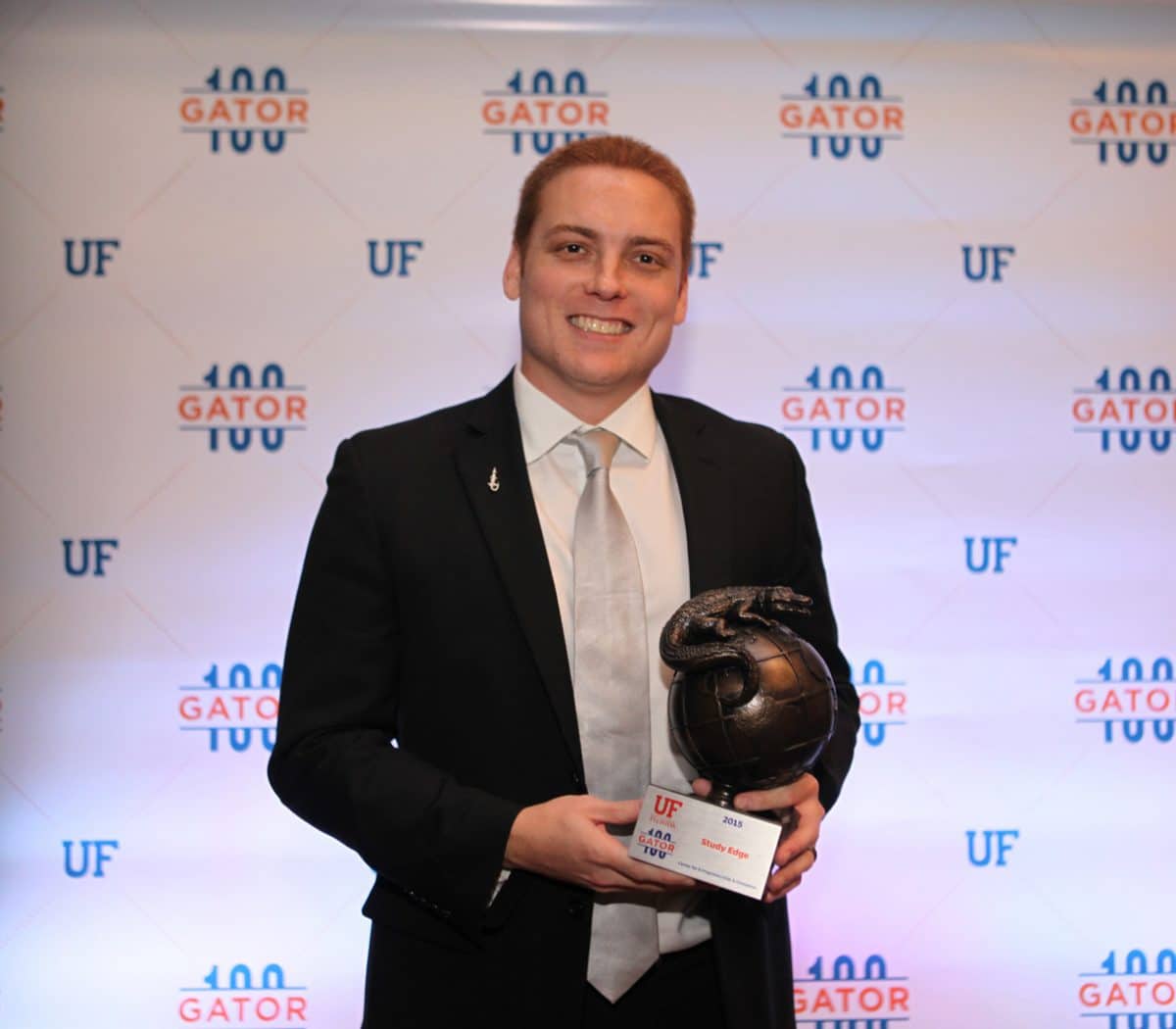
I know that entrepreneurs can be anyone from the owners of mom-and-pop stores to the developer of an app, but my first notable exposure to entrepreneurship was meeting the founder and CEO of Study Edge, Ethan Fieldman. He came to tell his story at meeting in the Leadership Development Program during my freshmen year of college.
For those of you who may not know, Study Edge is a tutoring service that creates video tutorials and other online learning supplements for over 50,000 University of Florida students. Ethan Fieldman came to talk about his college journey that led to the its creation. It began when Ethan blew quickly blew through all his scholarship money at the infamous midtown. Out of a need to pay the bills and the realization that people enjoyed listening to him tutor, he advertised a review session for Managerial Accounting and made payment optional. Astonished at the number of people that showed up and the number of people willing to pay, he continued to hold tutoring sessions and it soon took off.
Hearing Ethan’s story was inspirational. He hit an all-time low when he spent all his scholarship and was able to make a come-back by identifying an unmet need. This reiterates the point that being an entrepreneur doesn’t always mean doing something grand or new.
I joined this class to learn more about what the process of entrepreneurship is and what defines an entrepreneur. Does a new idea create an entrepreneur? An improved idea? So far, I have learned that recognizing an opportunity is the first step in being entrepreneurial. But beyond that, I was forced to think of opportunities myself (such as how to improve parking at UF, or how to get all online lectures to have closed captioning). Moreover, I have never really thought of myself as an entrepreneur or an innovator because I was under the impression that it takes many resources (including lots of money and time). It is only week three of the class and I have already learned that this is not always the case. In fact, learning that most start-ups only begin with 10k in funding was eye-opening.
In addition to learning about and applying the entrepreneurial process, I am excited to read books from the class reading list. I have read similar books including “How to Win Friends and Influence People” and “Scrum: The Art of Doing Twice the Work in Half the Time,” and usually enjoy classes that force me to allot some reading time.
For those of you who may not know, Study Edge is a tutoring service that creates video tutorials and other online learning supplements for over 50,000 University of Florida students. Ethan Fieldman came to talk about his college journey that led to the its creation. It began when Ethan blew quickly blew through all his scholarship money at the infamous midtown. Out of a need to pay the bills and the realization that people enjoyed listening to him tutor, he advertised a review session for Managerial Accounting and made payment optional. Astonished at the number of people that showed up and the number of people willing to pay, he continued to hold tutoring sessions and it soon took off.
Hearing Ethan’s story was inspirational. He hit an all-time low when he spent all his scholarship and was able to make a come-back by identifying an unmet need. This reiterates the point that being an entrepreneur doesn’t always mean doing something grand or new.
Pictured: Ethan Fieldman at the Gator100 Awards
Why am I in ENT3003:
I joined this class to learn more about what the process of entrepreneurship is and what defines an entrepreneur. Does a new idea create an entrepreneur? An improved idea? So far, I have learned that recognizing an opportunity is the first step in being entrepreneurial. But beyond that, I was forced to think of opportunities myself (such as how to improve parking at UF, or how to get all online lectures to have closed captioning). Moreover, I have never really thought of myself as an entrepreneur or an innovator because I was under the impression that it takes many resources (including lots of money and time). It is only week three of the class and I have already learned that this is not always the case. In fact, learning that most start-ups only begin with 10k in funding was eye-opening.
In addition to learning about and applying the entrepreneurial process, I am excited to read books from the class reading list. I have read similar books including “How to Win Friends and Influence People” and “Scrum: The Art of Doing Twice the Work in Half the Time,” and usually enjoy classes that force me to allot some reading time.
Subscribe to:
Posts (Atom)